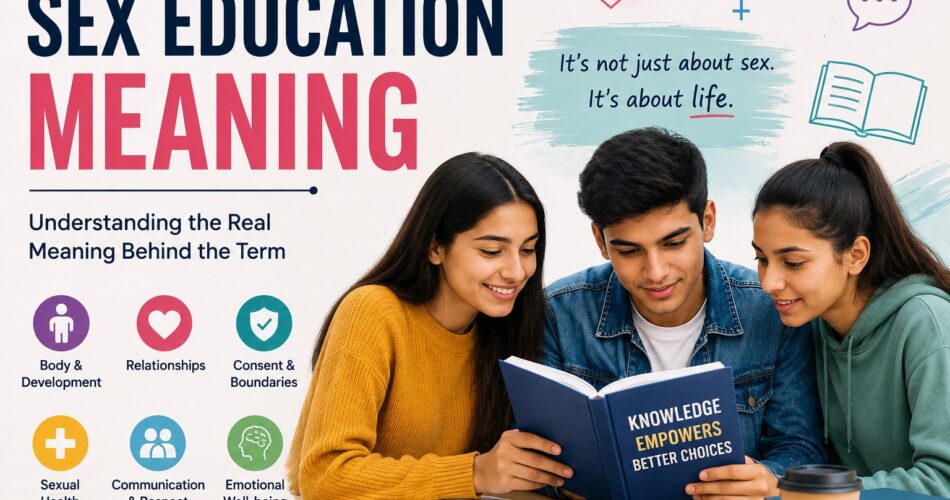
The words “sex education” is often misunderstood. Many people hear the phrase and immediately think it is only about learning about sex. This misunderstanding has existed for years and often prevents people from seeing the bigger picture.
The truth is that sex education covers much more than sexual activity. It is a form of education that helps people understand their bodies, relationships, emotions, health, safety, and personal responsibility.
Understanding the meaning of sex education is the first step toward understanding why it plays such an important role in modern society.
What Does Sex Education Mean?
Sex education means learning about human sexuality, physical development, reproductive health, relationships, consent, and personal well-being.
In simple words, it is education that helps people understand themselves and others better.
The purpose is to provide accurate information so individuals can make informed decisions about their health and relationships.
Sex education is not a single lesson or conversation. It is an ongoing learning process that often begins with age-appropriate topics during childhood and continues throughout life.
Breaking Down the Meaning of Sex Education
Let’s look at the phrase itself.
Sex
The word “sex” does not only refer to sexual activity.
It can also relate to:
- Human biology
- Reproduction
- Physical development
- Sexual health
- Human sexuality
Education
Education means learning and gaining knowledge.
When combined, sex education means learning about topics related to the human body, health, relationships, and personal development.
This broader meaning is often overlooked.
Why Do People Misunderstand the Meaning?
One reason is that the word “sex” often gets all the attention.
As a result, people may assume the subject focuses on only one topic.
In reality, modern sex education includes:
- Body awareness
- Puberty
- Communication
- Relationships
- Respect
- Consent
- Reproductive health
- Emotional well-being
The goal is not simply to discuss sex but to help people develop knowledge and life skills.
Sex Education vs Sexual Health Education
People often use these terms interchangeably, but they are not exactly the same.
Sex education is a broader concept that covers relationships, communication, personal development, and reproductive health.
Sexual health education focuses more specifically on maintaining sexual health and understanding health-related topics.
Both are important and often work together.
What Is the Main Goal of Sex Education?
The primary goal is to help people make informed decisions.
Good education provides facts instead of myths.
It encourages people to:
- Understand their bodies
- Respect others
- Build healthy relationships
- Make responsible choices
- Protect their health
Knowledge gives people confidence and helps reduce confusion.
Why Understanding the Meaning Matters
When people misunderstand sex education, they may miss out on valuable information that can improve their lives.
Understanding the true meaning helps people see that the subject is connected to:
- Health
- Safety
- Respect
- Relationships
- Communication
- Personal growth
These are skills that benefit people throughout life.
Final Thoughts
The meaning of sex education goes far beyond what many people assume.
It is not simply about learning about sex. It is about learning how the human body works, how to build healthy relationships, how to respect boundaries, and how to make informed decisions about health and well-being.
When people understand the real meaning of sex education, they often discover that it is one of the most practical forms of education a person can receive.
Frequently Asked Questions
What is the meaning of sex education?
Sex education is the process of learning about human sexuality, relationships, reproductive health, consent, and personal well-being.
Is sex education only about sex?
No. It also includes topics such as puberty, communication, relationships, respect, emotional health, and personal boundaries.
Why is sex education important?
It helps people gain accurate information about health, relationships, and responsible decision-making.
What is the purpose of sex education?
The purpose is to provide knowledge that helps people understand themselves, maintain good health, and develop healthy relationships.
Who can benefit from sex education?
People of all ages can benefit from learning about health, relationships, communication, and personal well-being.